Jungle
A Fresh Take on Playful Typography
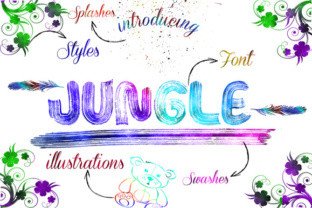
Jungle is a color font in the OpenType-SVG format, designed to bring a sense of play and energy to typographic work. It is not a conventional text face for long paragraphs or body copy. Instead, it serves as a decorative display typeface intended for situations where the visual personality of the letters matters as much as the words themselves. This typeface presents itself as a tool for creators who need something beyond standard serif or sans-serif options, offering color, texture, and a distinctly informal character.
The font is packaged with OTF and TTF files, but it is important to note that these are standard outline font files and do not carry the color information. The color rendering depends entirely on the OpenType-SVG format, which is supported in specific applications. Compatibility is limited to software that can interpret this format, including recent versions of Adobe Photoshop, Adobe Illustrator, Silhouette Studio, and Inkscape. Users working with Cricut Design Space will find that the OTF and TTF files are not compatible for color rendering, which is a significant practical constraint for crafters who rely on that platform. Anyone considering Jungle for a project should first verify that their design tools support OpenType-SVG color fonts.
What Makes Jungle Worth Discussing
Color fonts remain a relatively specialized category within typography. Most typefaces render in a single color, relying on the designer to apply fills, strokes, or effects manually. Jungle bypasses that workflow by embedding color directly into the glyphs. This means that when you type a character in a compatible application, it appears with the intended color and texture immediately, without additional styling steps. For professionals who produce invitations, greeting cards, headers, and social media graphics regularly, this can reduce production time significantly.
The playful nature of Jungle is evident in its letterforms. The shapes are not rigidly geometric or strictly calligraphic. They carry an organic, hand-drawn quality that avoids the sterile perfection many digital fonts exhibit. This makes the typeface suitable for projects that require a human touch or a sense of spontaneity. It works well for event materials where the tone is celebratory, casual, or whimsical. Birthday party invitations, baby shower announcements, and holiday cards are obvious candidates. But the font also has potential in branding contexts where a brand identity calls for warmth and approachability rather than corporate formality.
Another point worth discussing is the versatility implied by the product description. Jungle is marketed for headers, business cards, quotes, and posters. This suggests the typeface has been designed with multiple use cases in mind, not just one narrow application. A font that can move from a greeting card to a poster without looking out of place offers better long-term value than a novelty face that only works in one context.
Color Embedded at the Glyph Level
The defining feature of Jungle is that color is part of the font itself. In standard typography, color is an attribute applied after the type is set. With Jungle, the color is baked into the vector data. This changes the design workflow because you can type and instantly see the final colored result. For designers who produce high volumes of social media content, quote graphics, or event materials, this eliminates repetitive steps. It also ensures consistency across projects because the color values are fixed within the font and cannot be accidentally altered by a misclicked swatch.
Playful but Legible Letterforms
Display typefaces often sacrifice readability for visual impact. Jungle appears to strike a reasonable balance. The characters are stylized but remain recognizable, which is essential for short-form text like headlines, names, dates, and short phrases. A font that is too abstract loses its practical usefulness because viewers struggle to read it. Jungle retains enough conventional letter structure that the playful embellishments do not interfere with comprehension. For quotes and greeting cards, where the message is central, this legibility is a genuine strength.
File Format Considerations
The OpenType-SVG format is not universal. It works in Adobe applications, Silhouette, and Inkscape, but not in Cricut Design Space with the OTF/TTF files. This is a hard limitation that potential buyers must evaluate against their own hardware and software setup. If your workflow depends on Cricut, this typeface may not serve you well unless you are willing to export color elements as images rather than using the font directly. For users of Photoshop, Illustrator, or Inkscape, the compatibility is straightforward and reliable.
Real-World Performance and Usability
In practical use, Jungle performs best at display sizes. At small point sizes, the color details and decorative aspects of the glyphs become difficult to appreciate. The font is not designed for lengthy text blocks, and using it that way would likely produce cluttered, hard-to-read results. For headlines, titles, names, and short lines, the typeface shines. The color adds visual interest without requiring additional graphic elements, which can simplify layout design.
The font’s consistency is a factor worth noting. Because the color is embedded in the font file itself, every character in a given weight and style will render with the same color values across all compatible applications. This removes the variable of monitor calibration or application-specific color settings affecting the outcome. What you see in Photoshop will match what you see in Illustrator, provided both applications support the format properly.
However, there is a trade-off. The fixed color means you cannot easily change the color of individual characters without converting the text to outlines or using workaround methods. If your project requires a specific color palette that differs from what Jungle provides, you will need to plan accordingly. This is less flexible than a standard font where color is applied by the designer after typing. The convenience of instant color comes at the cost of customizability.
Durability for Repeated Use
For professionals who produce similar types of content regularly—such as a stationery designer who creates dozens of invitation sets each month—Jungle could become a reliable asset in a typeface library. Its distinctive look means it can serve as a signature style for certain project types. Over time, consistent use of a recognizable display font can help build a cohesive visual identity for a brand or a designer’s portfolio. The font does not appear to rely on trendy aesthetics that might date quickly. Its hand-drawn quality feels relatively timeless within the category of playful display typefaces.
Who Benefits Most from Jungle
The audience for Jungle is not every designer. It is a specialized tool for specific jobs. The people who will get the most practical value from this typeface include:
- Stationery and invitation designers who create wedding invitations, birthday party cards, baby shower announcements, and similar printed or digital materials. The playful, colorful nature of Jungle aligns well with celebratory events.
- Social media content creators who produce quote graphics, header images, and promotional posts. The embedded color reduces the time needed to style text, which matters when producing content at scale.
- Small business owners handling their own branding and marketing materials. A font like Jungle can add personality to business cards, flyers, and signage without requiring advanced graphic design skills.
- Silhouette and Inkscape users who work with cutting machines or vector design for craft projects. The color font compatibility with these tools opens creative possibilities for physical products like stickers, decals, and custom gifts.
- Bloggers and publishers who need distinctive headers or pull quotes that stand out from standard web typography. Jungle can be used in image-based headers or PDF layouts where the font is embedded.
These user groups share a common need: they want typography that carries visual personality without demanding extensive post-processing. Jungle delivers on that need for those working in compatible environments.
Practical Recommendations and Limitations
Before purchasing or downloading Jungle, evaluate whether your primary design applications support OpenType-SVG color fonts. If you use Canva, Microsoft Office, or web-based design tools, the color features may not render at all. In those cases, the OTF and TTF files will still provide the letter shapes, but without the color, the font loses much of its intended character. You would essentially be using a stripped-down version of the typeface.
For users of Adobe Creative Cloud, Silhouette Studio, or Inkscape, the experience will be positive as long as you work at appropriate sizes. Avoid using Jungle for body text, small print, or any content longer than a few lines. Its strengths are in short, impactful displays. Pair it with a clean, neutral sans-serif or serif font for supporting text to maintain readability and visual hierarchy.
Another consideration is color consistency across different output methods. A color font that looks vibrant on screen may render differently on paper, especially depending on the printer and paper type. If you plan to print materials using Jungle, run test prints to confirm the colors reproduce as expected. Digital displays are more predictable, but printing introduces variables that can affect the final appearance.
For crafters using Cricut, the limitation is clear: the OTF and TTF files are not compatible for color rendering. If your projects rely on this platform, you may need to create text as outlines or images to achieve a similar effect, which adds extra steps. In this case, weigh whether the visual result justifies the additional workflow complexity.
Long-Term Value Assessment
Jungle occupies a specific niche in the typeface market. It is not a workhorse font for daily use across all projects. It is a specialty tool that earns its place through distinctiveness and time-saving color embedding. For professionals whose work regularly includes decorative display typography, Jungle can pay for itself in reduced design time and increased visual consistency. For casual users or those whose projects rarely require playful color lettering, the font may see limited use.
The OpenType-SVG format is becoming more common, but it is not yet standard across all design software. As adoption grows, fonts like Jungle may become more versatile. For now, the practical value is tied directly to software compatibility. If your tools support the format, Jungle is a well-executed example of what color fonts can offer. If your tools do not, the value is significantly diminished.
Ultimately, the decision comes down to whether your projects match the font’s strengths. If you produce materials where playful, colorful typography enhances the message and your software supports OpenType-SVG, Jungle is a practical addition to your font library. If your needs lean toward conventional typography or your workflow excludes compatible applications, other typefaces will serve you better. Understanding that distinction is the key to making an informed choice.