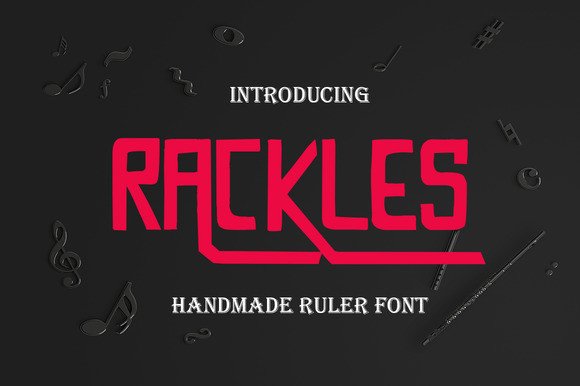
Rackless: The Handmade Ruler Font That Brings Measured Elegance to Modern Design
Typography is the silent partner in any design project. It sets the tone, establishes credibility, and often determines whether a piece feels polished or amateurish. In recent years, designers have moved away from sterile, perfectly uniform typefaces in favor of fonts that carry a human touch. Enter Rackless, a handmade ruler font that strikes a rare balance between structural precision and organic warmth. Whether you are crafting wedding invitations, refining a brand identity, or building social media graphics, Rackless offers a distinctive voice that feels both intentional and approachable.
In this article, we will walk through what makes Rackless unique, where it shines brightest, and how you can integrate it into your own workflow. We will also address practical considerations—licensing, legibility, pairing suggestions, and file formats—so you can decide with confidence whether this typeface belongs in your toolkit.
What Exactly Is a Handmade Ruler Font?
Before diving into Rackless specifically, it helps to understand the category it belongs to. A handmade ruler font is a typeface that mimics the appearance of hand-drawn letters created with a ruler or straightedge. The result is a look that is simultaneously geometric and imperfect—clean lines with subtle variations in thickness, spacing, and alignment that no computer algorithm could replicate on its own.
Rackless takes this concept and refines it. Each character appears as though it were carefully sketched with a fine pen along a ruler’s edge, yet the overall set maintains enough consistency to work as a functional text face. This duality is what makes Rackless so versatile. It does not scream “hand-drawn” in a way that distracts; rather, it whispers craftsmanship, inviting the reader to linger on the details.
The Design Characteristics of Rackless
Rackless is not just another display font. Its design carries several deliberate traits that set it apart from competitors:
- Consistent baseline and cap height — Despite being handmade, Rackless maintains a steady visual rhythm that makes it readable even in longer passages.
- Subtle ink bleed and stroke variation — These imperfections add warmth without sacrificing clarity.
- Distinctive angular terminals — Many characters end in sharp, ruler-drawn cuts that give the font its signature edge.
- Extended character set — Rackless includes uppercase, lowercase, numerals, punctuation, and several ligatures, making it suitable for multilingual projects.
These features combine to create a typeface that feels both nostalgic and current—a rare combination in a market flooded with either ultra-minimalist sans serifs or wildly decorative scripts.
Where Rackless Excels: Practical Applications
Understanding a font’s design philosophy is one thing. Knowing where to deploy it effectively is another. Rackless performs exceptionally well in a range of contexts, and part of its appeal is that it does not force you to choose between beauty and utility.
Wedding Invitations and Social Stationery
Perhaps the most obvious use case for Rackless is in invitation design. Couples today often seek a look that is personal yet polished, romantic without being saccharine. Rackless provides that middle ground. Use it for the couple’s names on a save-the-date card, for the ceremony details on the main invitation, or even for envelope addressing when paired with a simpler sans serif. The handmade quality of the letters suggests that time and care went into every element—a sentiment that resonates deeply with wedding clients.
For greeting cards, Rackless works equally well. Its slightly irregular strokes lend themselves to sentiments that feel heartfelt rather than mass-produced. Whether you are designing a birthday card, a thank-you note, or a holiday greeting, Rackless brings a personal touch that recipients notice immediately.
Branding and Logo Design
Brands that want to project authenticity, craftsmanship, or artisanal quality will find a natural ally in Rackless. Small businesses—bakeries, coffee shops, boutique clothing lines, stationery stores—can use Rackless as their primary wordmark font or as a complementary accent in their visual identity. The font’s ruler-drawn origins imply precision and attention to detail, while its handmade character signals that the brand values human connection over corporate sterility.
One word of caution: because Rackless carries a strong personality, it is best reserved for brands that can afford to stand out. For ultra-corporate or tech-heavy industries, a more neutral typeface may be safer. But for any brand whose story revolves around craft, tradition, or personal service, Rackless is a compelling choice.
Business Cards and Small-Format Print
Business cards are often the first physical touchpoint a potential client has with your brand. Rackless works beautifully on a small canvas because its letterforms remain legible at modest sizes while still conveying a sense of artistry. Pair it with a clean sans serif for contact information and use Rackless for your name or tagline. The contrast between the handmade headline and the utilitarian body text creates a natural hierarchy that guides the eye.
Posters, too, benefit from Rackless. Because the font has a strong visual presence, it can serve as a headline face for event posters, art show announcements, or product launches. The ruler-drawn aesthetic suggests immediacy and action—as if the poster were hand-lettered by the designer moments before going to press.
How Rackless Fits Into Modern Workflows
Designers today work across multiple media—print, web, social, and sometimes even motion. Rackless is versatile enough to transition between these formats with minimal friction. Here is how it performs in different environments.
Print Projects
Rackless shines brightest in high-resolution print. The subtle ink bleed and stroke variations that define its character are most visible on coated or uncoated paper, where the texture of the stock interacts with the letterforms. If you are printing on a letterpress or using a digital press with fine detail capabilities, Rackless will reward you with a tactile, almost three-dimensional quality.
For paper goods like menus, place cards, or product packaging, Rackless adds a bespoke feel. Even a simple price tag or hang tag becomes an object of desire when set in a typeface that looks like it was drawn by hand with care.
Digital and Social Media
On screen, Rackless retains its warmth but requires a bit more attention to sizing. Because handwritten fonts can become muddy at small sizes on low-resolution displays, it is best used for headlines, pull quotes, and hero text rather than body copy. For Instagram posts, Facebook covers, or Pinterest pins, Rackless works beautifully as a focal element. Consider overlaying it on a photograph or a textured background to emphasize its handmade origins.
For websites, use Rackless sparingly. Reserve it for headings, navigation labels, or call-to-action buttons where you want to make an impression. Pair it with a clean, legible body font such as Open Sans, Lato, or Merriweather to ensure readability on mobile devices.
Video and Motion Graphics
If your workflow includes animation, Rackless can be used in titling sequences or lower-thirds for videos that aim for a warm, approachable tone. The font’s geometric yet imperfect forms hold up well when animated with gentle reveals or handwritten-style effects. Just be sure to test kerning and spacing at various frame sizes, as some handmade fonts can appear uneven in motion.
Practical Considerations Before Choosing Rackless
No typeface is perfect for every job, and being honest about Rackless’s limitations will help you use it more effectively.
Licensing and File Formats
Rackless is typically available in OTF, TTF, and WOFF formats, which cover most print and web use cases. Always check the license agreement before using it in commercial projects. Some foundries offer a desktop license for print and a separate web license for digital use. If you are designing for a client, make sure they have the appropriate license to use the font in their own marketing materials. Transparent licensing protects everyone and ensures that the designer behind Rackless is fairly compensated for their work.
Legibility at Different Sizes
Rackless is best suited for display sizes—typically anything above 18 points for print or 24 pixels for web. At very small sizes, the handmade irregularities can make letters appear crowded or indistinct. If your project requires fine print (disclaimers, captions, or footnotes), use a simpler companion font instead. Rackless is a star, but it does not need to carry every scene.
Pairing Suggestions
Font pairing can make or break a layout. Because Rackless has a strong personality, it pairs best with neutral or minimalist counterparts. Here are a few combinations that work well:
- Rackless + Open Sans — A go-to for modern branding, where Rackless handles the headline and Open Sans carries the body.
- Rackless + Playfair Display — For a more elegant, editorial feel, particularly in wedding or luxury projects.
- Rackless + Montserrat — A clean, geometric sans serif that lets Rackless take center stage without competing.
- Rackless + EB Garamond — If you want a traditional serif complement, this pairing works well for long-form print pieces like menus or lookbooks.
When pairing, avoid using another handmade or script font alongside Rackless unless you are deliberately going for a layered, collage-inspired look. Too many organic elements can create visual noise rather than harmony.
Common Questions Designers Ask About Rackless
By now, you probably have a solid sense of whether Rackless fits your next project. But a few practical questions tend to come up frequently, and addressing them here can save you time down the road.
Can Rackless Be Used for Body Text?
Technically yes, but it is not recommended for long reading passages. The handmade, ruler-drawn quality that makes Rackless so appealing in headlines can become fatiguing in paragraphs. Reserve it for short bursts of text—a few lines at most—where each word can be appreciated individually.
Does Rackless Include Multiple Weights?
Most versions of Rackless are offered as a single weight or a small family (regular and bold). Check the foundry’s product page for details. If you need a full family with multiple weights for a complex project, you may need to pair Rackless with another font for variety.
Is Rackless Suitable for Logo Design?
Absolutely. In fact, Rackless is an excellent choice for logo design, especially for brands that emphasize craftsmanship, tradition, or personal service. The ruler-drawn aesthetic suggests that the brand values precision and care. Just make sure the font is legible at the sizes your logo will appear, from a tiny favicon to a large storefront sign.
How Does Rackless Compare to Other Hand-Drawn Fonts?
Rackless occupies a specific niche within the broader category of hand-drawn typefaces. Unlike brush scripts, which feel loose and expressive, or chalkboard fonts, which mimic rough textures, Rackless is measured and geometric. Its handmade quality is subtle rather than overt, making it more versatile than many alternatives. If you have tried other hand-drawn fonts and found them too casual or too messy, Rackless may be the refined option you have been looking for.
Final Observations on Rackless
Rackless is more than a font—it is a design tool that brings the warmth of handcraft to the precision of typography. Whether you are a freelance designer, a small business owner, or a creative director at an agency, adding Rackless to your library gives you a reliable option for projects that demand authenticity without sacrificing polish.
It works well across print, digital, and motion media, provided you respect its strengths and pair it wisely. Use it for invitations, branding, business cards, quotes, posters, or any project where you want the letters themselves to tell a story. The ruler-drawn origins of Rackless remind us that good design often lives at the intersection of intention and imperfection—a place where every line matters, and every letter has a voice.
If you are ready to explore what Rackless can do for your next project, start by testing it in real layouts. Pair it with a simple sans serif, try it on different paper stocks, and see how it performs at various sizes. More often than not, you will find that Rackless brings a quiet confidence to your work—the kind that clients notice and audiences remember.