Bora: The Handmade Brush Font That Brings Authenticity to Any Design
You open a new project—maybe a poster for a local event, a logo for a friend’s café, or a wedding invitation that needs to feel personal but not overly fussy. You scroll through fonts, but most feel either too rigid or too generic. Then you try Bora. Instantly, the lettering feels alive—slightly uneven, human, and full of character. That is the essence of Bora: a handmade brush font that doesn’t try to be perfect, and that imperfection is exactly what makes it so valuable.
In this article, we explore Bora from a practical standpoint—what it does well, where it fits best, and who can benefit from using it. Whether you are a professional designer, a small business owner creating your own marketing materials, or someone planning a special event, understanding Bora will help you decide if it’s the right tool for your next project.
What Is Bora? A Closer Look at the Handmade Brush Font
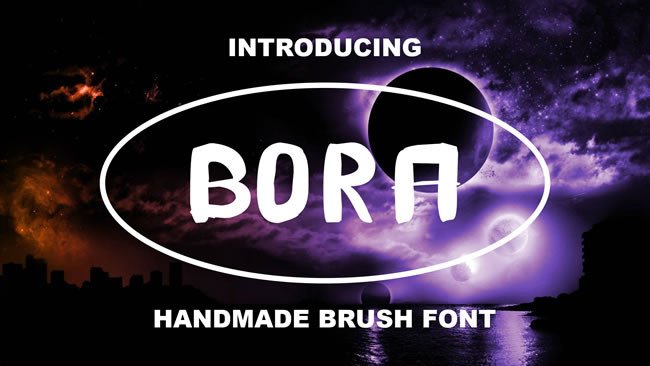
Bora is not your average digital font. It is classified as a handmade brush font, meaning the letterforms were created using an actual brush, then digitized while preserving the natural irregularities that come from hand-drawn strokes. The result is a typeface that carries the energy of physical ink on paper—texture, slight variation in line thickness, and an organic flow that mimics real handwriting or brush lettering.
Unlike many script fonts that look too polished or mechanically smooth, Bora retains a raw, tactile quality. Each character may have subtle differences in slope, weight, or spacing, giving your text a sense of movement. This makes it especially effective when you want to convey warmth, creativity, or a handcrafted feel without losing readability.
Key Characteristics of Bora
- Natural brush strokes: The letters look as if they were painted by hand, with visible brush texture and uneven edges.
- Moderate legibility: While it is a script style, Bora maintains enough clarity for short to medium-length text, especially at larger sizes.
- Versatile weight: It strikes a balance between bold presence and delicate detail, making it suitable for both headlines and accents.
- Handmade authenticity: No two characters feel identical, which adds a layer of personality that standard fonts lack.
Where Can You Use Bora? Real-World Applications
Because Bora is neither too ornate nor too plain, it fits a wide range of projects. Below are some of the most common and effective uses, drawn from experience in both digital and print design.
Posters and Flyers
For event promotions—concerts, art shows, workshops, or community gatherings—Bora works as a strong display font. Its brush texture grabs attention from a distance, while the handcrafted look suggests something authentic and non-corporate. Pair it with a clean sans-serif body font to keep the poster readable but visually interesting. Example: a music festival poster where the headline “Summer Sessions” is set in Bora, and the lineup details use a simple geometric sans.
T-Shirts and Apparel
Apparel designs benefit from fonts that feel like they were painted or drawn on fabric. Bora mimics that effect perfectly. Whether it is a single word like “Explore” on a T-shirt or a short quote on a hoodie, the brush strokes give the garment a handcrafted, artistic vibe. It works especially well when combined with distressed or textured backgrounds.
Logos and Branding
Small businesses and creative professionals often look for a typeface that communicates personality without needing heavy illustration. Bora can serve as a standalone logo mark or the main wordmark for brands related to artisanal products, coffee shops, bakeries, wellness studios, or independent boutiques. Because it is handmade, it suggests care, creativity, and a personal touch—qualities many businesses want to project. Just be mindful that for very long brand names, the script style may become harder to read at small sizes.
Labels and Packaging
Product labels for homemade goods, craft beverages, organic skincare, or stationery often rely on fonts that look hand-lettered. Bora on a jar of honey, a bottle of kombucha, or a box of candles adds authenticity. It tells the customer that this product was made with attention, not mass-produced. For small product descriptions (e.g., “wildflower honey”), use Bora at a medium scale; reserve smaller details for a complementary sans-serif.
Wedding Invitations and Cards
Wedding stationery demands a delicate balance between elegance and approachability. Bora hits that note. It is stylish enough for formal invitations (especially when paired with a refined serif for body text) but relaxed enough for casual, outdoor, or bohemian weddings. It also works for save-the-dates, thank-you cards, and place names. Because of its brush texture, it evokes a handmade, heartfelt quality that your guests will notice.
Anything Else You Can Imagine
The nature of a versatile brush font like Bora means its applications go beyond the obvious. Use it for social media graphics to stand out from generic stock fonts. Use it for book covers, magazine headlines, signage, or website headers that need a splash of personality. The only real limit is context—if the design calls for human warmth and creative energy, Bora is a strong candidate.
Who Benefits Most from Using Bora?
While any designer can use Bora, certain groups will find it especially valuable:
- Graphic designers and illustrators who want a reliable brush script without spending hours hand-lettering every word.
- Small business owners handling their own branding—no need for expensive custom lettering.
- Event planners and wedding coordinators creating cohesive stationery that feels personal.
- Content creators and social media managers who need visuals that break away from corporate minimalism.
- Hobbyists and DIY enthusiasts making invitations, stickers, or gifts at home.
Strengths and Considerations: What to Expect
Every typeface has trade-offs. Knowing them helps you decide when Bora is the right choice and when you might need something else.
Strengths of Bora
- Unique personality: It stands out among thousands of digital fonts because it looks genuinely hand-painted.
- Warmth and approachability: Perfect for projects that need to feel human rather than automated.
- Good readability at display sizes: At 24pt and above, Bora is clear and easy to parse, even for short phrases.
- Works across media: It translates well from print to screen, though you may need to adjust spacing for different resolutions.
- Creative flexibility: Its imperfections make it easy to integrate with other hand-drawn elements, textures, or photographs.
Limitations and Practical Expectations
- Not ideal for long body text: Like most brush scripts, Bora becomes fatiguing to read in paragraphs. Use it for headlines, slogans, or short blocks only.
- Lower readability at small sizes: The brush texture can blur or lose detail below 14–16px, especially on screen. Avoid using it for fine print.
- May not suit formal corporate branding: If your brand requires strict professionalism or high seriousness (law firms, financial institutions), Bora’s casual vibe might clash.
- Spacing can be tricky: Handmade fonts often have variable letter spacing. You may need to manually kern or adjust tracking for specific word combinations.
- Limited language support: Some brush fonts may lack extended Latin characters or diacritics. Check the font’s character set if you need to write in multiple languages.
How to Evaluate If Bora Suits Your Project
Before committing to any font, ask yourself a few practical questions. You can apply this to Bora or any brush script you’re considering.
- What is the tone of your project? If it needs to be friendly, artistic, or rustic, Bora fits. If it needs to be cold, precise, or authoritative, look for a geometric or serif font.
- What size will the text be? For headlines, posters, or logos, Bora excels. For lengthy paragraphs or tiny labels, choose a more neutral font.
- Who is your audience? Bora resonates with audiences who appreciate craftsmanship, authenticity, and creativity. If your audience expects corporate polish, test a pairing first.
- How will the font be delivered? In print, Bora’s texture shines. On screen, test it on various devices—some browsers or screens may render the brush details differently.
- Does it pair well with other fonts? Bora typically pairs best with clean sans-serifs (e.g., Open Sans, Montserrat) or straightforward serifs. Avoid pairing it with another ornate script, as that becomes chaotic.
Final Thoughts: Bora as a Creative Tool
Bora is not a font that tries to do everything—and that is its strength. It knows it is a handmade brush font meant to add personality, warmth, and authenticity. When used with intention, it elevates designs from ordinary to memorable. Whether you are crafting a poster for a local art festival, designing a logo for a small coffee roaster, or personalizing wedding invitations, Bora brings a human touch that digital perfection cannot replicate.
Ultimately, the best way to understand Bora is to try it yourself. Pull up a mockup, drop in a few words, and see how the brush strokes feel in your project. You may find that this is exactly the voice you’ve been searching for.