Giglio: A Modern Typeface Rooted in Early 20th Century Design
Typography is more than letters on a screen—it is the voice of your brand, the tone of your message, and the first impression your audience forms in milliseconds. In a crowded landscape of digital fonts, Giglio stands apart. Designed as a modern typeface, Giglio draws direct inspiration from the graphic styles of the early 20th century, yet it avoids being a mere revival. Instead, it uses strict lines and clean curves to shape an alphabet that feels both timeless and contemporary. Whether you are crafting a logo, building a website, or designing printed materials, Giglio offers a distinctive balance of structure and elegance. This article explores what makes Giglio unique, where it shines, and how to decide if it fits your next project.
What Makes Giglio Different? The Design Philosophy Behind the Font
Most modern typefaces lean heavily into either geometric precision or organic warmth. Giglio deliberately bridges both camps. Its strict lines provide a sense of order and professionalism—ideal for headlines, branding marks, and interface elements. Yet the clean curves introduce a human touch that prevents the typeface from feeling cold or mechanical.
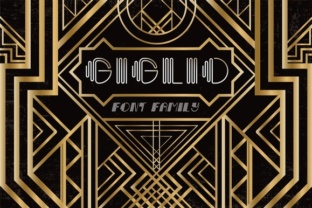
The inspiration from early 20th century design movements—such as Art Deco, Bauhaus, and early modernist posters—is evident in the consistent stroke widths, the balanced proportions of uppercase characters, and the subtle tension between straight and rounded forms. Unlike many historical revivals that attempt to replicate imperfections of the past, Giglio refines those influences into a polished, contemporary tool. This makes it equally comfortable in a minimalist digital interface or a vintage-inspired print campaign.
Key design characteristics include:
- Strict vertical and horizontal lines that create a stable, grounded reading rhythm.
- Clean, sweeping curves on characters like C, G, S, and Q that soften the overall appearance.
- Generous x-height for improved legibility at smaller sizes, a practical advantage for body text and captions.
- Distinctive punctuation and numerals that reflect the same design principles—each glyph feels intentional, not incidental.
These features make Giglio a versatile tool rather than a one-note display font. It can carry a headline with authority while still being readable in a paragraph of body copy.
Who Benefits Most From Using Giglio?
Because Giglio balances classic structure with modern clarity, it serves a wide range of users. However, certain professionals and creators will find it particularly valuable.
Brand Designers and Identity Creators
If you develop logos, wordmarks, or brand guidelines, Giglio offers a distinctive personality without being distracting. Its strict lines convey reliability and precision—attributes that work well for legal firms, architecture studios, financial services, and high-end retail. The clean curves add enough warmth to avoid feeling corporate or sterile. For brands that want to communicate heritage with a contemporary edge, Giglio delivers that message without extra ornamentation.
Web and UI Designers
In digital interfaces, readability at various screen sizes is non-negotiable. Giglio’s generous x-height and well-defined letterforms maintain clarity from large hero headings down to small navigation labels. The font’s even color (the visual density of text on a page) reduces eye strain during extended reading—a subtle but crucial advantage for content-heavy websites, dashboards, or mobile apps. Additionally, the geometric consistency of Giglio pairs well with modern layout grids and component-based design systems.
Print and Editorial Creators
Magazines, brochures, posters, and packaging benefit from Giglio’s dual personality. In large display sizes, the strict lines and clean curves create strong visual impact. In body text, the typeface remains comfortable to read over longer passages, which is often a challenge for geometric fonts that prioritize style over legibility. If you are designing a product catalog, an art monograph, or a lifestyle magazine, Giglio provides a cohesive typographic voice from cover to colophon.
Business Owners and Marketers
For small business owners managing their own materials, Giglio reduces the need to juggle multiple typefaces. A well-chosen font family can unify everything from your website to your business cards to your social media graphics. Giglio’s range of weights (typically light, regular, medium, bold, and black, often with matching italics) gives you flexibility without requiring a deep knowledge of typography. You can rely on one family to do the work of several.
Where Giglio Excels: Real-World Applications
Understanding a typeface’s strengths is easier when you picture specific use cases. Here are scenarios where Giglio performs especially well.
Scenario 1: A Boutique Law Firm Rebranding
A small firm wants to move away from generic serif fonts and convey both tradition and approachability. Giglio used in all caps for the firm’s name on stationery, paired with the regular weight for body text in engagement letters, creates a professional yet welcoming identity. The strict lines suggest order and precision—qualities clients value in legal counsel. The clean curves in the ampersand and numerals add a subtle, memorable detail that sets the brand apart from competitors.
Scenario 2: A Modern Coffee Shop Menu Board
For a café that blends industrial aesthetics with cozy warmth, Giglio in medium weight for drink categories and light weight for descriptions provides clear hierarchy. The typeface’s even spacing and distinctive letterforms remain legible from a distance, even on chalk-style or digital menu boards. The balance of strict and soft forms mirrors the café’s own mix of concrete surfaces and warm wood tones.
Scenario 3: A Digital Product Dashboard
A SaaS startup building analytics software needs a typeface that works at multiple scales—from dashboard titles to data labels to tooltips. Giglio’s consistent stroke width and open counters prevent compression at small sizes. The family’s range of weights allows designers to create clear visual contrast between primary, secondary, and tertiary information without switching to another font. This consistency reduces cognitive load for users navigating complex data.
Scenario 4: A Limited Edition Art Print Series
An illustrator releasing a series of prints inspired by 1920s travel posters chooses Giglio for the accompanying text. The typeface’s early 20th century roots align with the visual theme, while its modern refinement ensures the text doesn’t feel dated. The combination of strict lines in the title and clean curves in captions or edition numbers creates a cohesive, collectible piece.
Strengths, Considerations, and Limitations
No typeface is perfect for every project. Understanding Giglio’s strengths and limitations will help you decide if it fits your specific needs.
Strengths
- Versatility across media: Works in print, web, mobile, and environmental graphics without losing character.
- High legibility: Generous x-height and open letterforms make it readable at small sizes and short viewing distances.
- Distinctive personality: Avoids the anonymity of generic sans-serifs while remaining professional.
- Weight range: Multiple weights allow for hierarchy and emphasis within a single family.
- Language support: Typically includes extended Latin characters, making it suitable for multilingual projects.
Considerations
- Spacing in all-caps setting: When using Giglio in all capitals for extended text, manual tracking adjustments may be needed to prevent letters from feeling too tight.
- Pairing with other typefaces: While Giglio stands well alone, if you plan to pair it with a serif or script, choose complementary fonts that don’t compete with its strong geometric identity. A neutral serif or a humanist sans often works best.
- Display vs. text: Although Giglio is readable in body text, it was designed with display usage in mind. For very long reading passages (more than 500 words), some readers may prefer a more traditional text face. Testing at your intended size is recommended.
Limitations
- Limited decorative styles: Giglio does not typically include elaborate swashes, stylistic alternates, or ornament sets. If your project requires ornate typographic flourishes, you may need to supplement with another font.
- Not ideal for highly condensed spaces: Its natural proportions are relatively generous. If you need to fit large amounts of text into narrow columns, a condensed or narrower typeface may be more practical.
- Lower contrast in very light weights: The lightest weight of Giglio can appear faint at small sizes on low-resolution screens. Reserve it for large display settings or high-quality print.
How to Evaluate if Giglio Is Right for Your Project
Choosing a typeface is a decision that affects readability, brand perception, and user experience. Here is a practical checklist to help you decide whether Giglio suits your specific needs.
- Define your primary use case. Are you designing headlines, body text, or both? Giglio performs best when it can lead the visual hierarchy in headlines and support reading in shorter text blocks.
- Test at actual sizes. Download the trial version and set your sample text at the exact sizes it will appear. Evaluate legibility, color, and overall feel on both screen and print.
- Assess your brand voice. Does your brand benefit from a mix of strictness and warmth? Giglio works well for brands that want to communicate control, quality, and approachability in equal measure.
- Check language requirements. Verify that Giglio covers all the characters and diacritics you need for your target languages.
- Consider your technical environment. For web use, confirm that the font files (WOFF2, WOFF) load efficiently and that fallback fonts are acceptable. For print, ensure the licensing covers your distribution method.
Final Thoughts: The Value of a Thoughtful Typeface
In an era where thousands of fonts are available at a click, choosing one with a clear design philosophy matters. Giglio is not trying to be everything to everyone. It commits to a vision—strict lines and clean curves inspired by early 20th century forms—and delivers that promise consistently. For designers, business owners, and creators who value typography that carries both personality and practicality, Giglio offers a reliable, distinctive tool.
The best way to understand a typeface is to use it. Set a headline in Giglio. Watch how the straight strokes ground the text while the curved letters add motion. Notice how it holds its shape at different sizes. If that balance of structure and flow aligns with what your project needs, Giglio may become a font you return to again and again. Whether you are building a brand, launching a website, or producing printed materials, a well-chosen typeface is an investment in clarity—and Giglio delivers clarity with character.