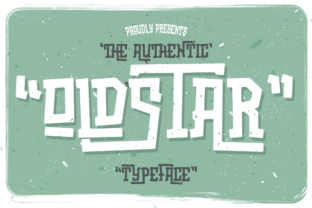
Oldstar: A Display Font Blending Vintage Character with Modern Clarity
When selecting a typeface for a title treatment, logotype, or headline, the balance between personality and readability is often the decisive factor. Oldstar enters this space as a display font that deliberately bridges two stylistic eras: it carries the warmth and character of vintage lettering while maintaining the clean lines expected in contemporary design. For anyone evaluating typefaces for branding, packaging, or editorial projects, understanding what Oldstar offers—and where its limitations may appear—is essential for making an informed choice.
What Oldstar Is and How It Works
Oldstar is a display typeface designed primarily for use at larger sizes, such as headings, titles, and logotypes. Its letterforms draw inspiration from mid-century signage and printed ephemera, but the execution avoids strict period reproduction. Instead, the font refines those historical cues with modern proportions and spacing, creating a look that feels both familiar and fresh. The result is a typeface that can anchor a brand identity or add a distinctive voice to a single project without becoming a stylistic cliché.
The font includes a range of characters suited for most Western languages, and its design prioritizes legibility at display sizes. Unlike some vintage-inspired fonts that sacrifice clarity for atmosphere, Oldstar maintains open counters and consistent stroke weights, which helps it read well even when scaled down for subheadings or small labels.
Why Designers and Brand Managers Consider Oldstar
Several practical motivations lead someone to evaluate Oldstar:
- Brand differentiation: In a crowded visual landscape, a typeface with genuine character can help a brand stand out. Oldstar offers a distinct voice without veering into novelty or gimmickry.
- Project versatility: The font works across multiple applications—logo design, poster typography, website headers, product packaging—which reduces the need to license multiple display faces.
- Time-saving: A single well-crafted font can eliminate the need to manually distress or modify a cleaner typeface to achieve a vintage effect.
- Consistency across media: Because Oldstar is a complete set of characters rather than a custom lettering project, it ensures consistency in spacing, kerning, and weight from print to digital.
These factors make Oldstar appealing for anyone who values efficiency and cohesion in their typography workflow.
Benefits of Using Oldstar for Title Treatments and Logotypes
The primary strength of Oldstar lies in its ability to convey a specific mood without overwhelming other design elements. When used as a title treatment, the font adds a layer of visual texture that suggests heritage, craftsmanship, or authenticity. This can be particularly effective for brands in industries like craft food and beverage, independent retail, hospitality, or creative services where a human-scaled, approachable image is valuable.
For logotypes, Oldstar's balance of vintage and modern means it can pair well with a wide range of secondary typefaces. A clean sans-serif for body copy often complements Oldstar's decorative quality, creating a clear hierarchy between the logo mark and supporting text. The font's consistent baseline and x-height also make it easier to integrate with icons or symbols without visual friction.
Another practical benefit is the font's performance in single-line treatments. Oldstar's letter spacing is designed to hold together well in all-caps settings, which is a common requirement for logotypes. This saves time during the initial layout phase because less manual kerning is needed compared to more ornate display fonts.
Tradeoffs and Considerations to Keep in Mind
No typeface is universally optimal, and Oldstar comes with its own set of tradeoffs that should be weighed against project needs.
- Size restrictions: Oldstar is a display font, meaning its details can become muddy at small sizes. Using it for body text or captions will likely result in reduced legibility. Designers should plan for its use at 18 points or larger in most contexts.
- Style limitations: The font's vintage-modern blend may not suit every brand personality. For projects requiring a strictly futuristic, minimalist, or formal tone, Oldstar's character could feel out of place.
- Weight and variation options: Depending on the version you evaluate, Oldstar may offer a limited set of weights (such as regular and bold) compared to larger type families. This can restrict flexibility in complex typographic systems where multiple weights are needed for hierarchy.
- License considerations: As with any commercial font, the license terms affect how Oldstar can be used in web, app, or broadcast contexts. It is worth reviewing the specific license before committing to a project.
Understanding these tradeoffs helps prevent misapplication. For example, using Oldstar in a dense, small-format brochure could frustrate readers, whereas reserving it for headlines and key visuals would play to its strengths.
Scenarios Where Oldstar Is a Strong Fit
Oldstar performs best in projects where the visual tone needs to feel curated but not cold. Specific situations where it may be a strong choice include:
- Craft or artisanal branding: Coffee roasters, bakeries, breweries, or small-batch producers often benefit from a typeface that suggests quality and care without looking corporate. Oldstar's balanced character supports that message.
- Short-run publications: Magazine covers, event programs, or zines where the title treatment is the primary visual anchor can leverage Oldstar's distinct presence.
- Digital headers and hero sections: On websites where a large hero headline sets the brand's tone, Oldstar can add personality while remaining legible on screens.
- Stationery and collateral: Business cards, letterheads, and signage gain a cohesive, professional look when Oldstar is used consistently for the company name or tagline.
- Logotypes for service-based businesses: Agencies, studios, and consultancies that want to communicate creativity and reliability may find Oldstar helps differentiate their visual identity.
In each of these cases, the font's vintage-modern blend reinforces the desired message without requiring extensive additional art direction.
Situations Where Alternatives May Be Worth Considering
While Oldstar has clear strengths, there are scenarios where other typefaces may better serve the project's goals.
- Highly formal or corporate branding: For law firms, financial institutions, or luxury brands where tradition and formality are paramount, a classic serif or refined sans-serif may be more appropriate. Oldstar's approachable character might undercut the gravitas such brands require.
- Extended body text needs: If the project demands a single font for both headlines and paragraphs, Oldstar is not designed to fill that role. A type family with multiple text and display cuts would be a better choice.
- Modern minimalist design: Brands built around extreme simplicity, such as tech startups or contemporary architecture firms, often prefer geometric sans-serifs. Oldstar's decorative quality could conflict with a stripped-down aesthetic.
- Global or multilingual projects: Depending on the character set offered, Oldstar may not provide full support for non-Latin scripts. Designers working in Cyrillic, Greek, or CJK contexts should verify coverage before adoption.
- Budget-sensitive projects: If a project has a very limited budget, free alternatives exist in the vintage display genre. While they may not match Oldstar's polish, they can serve for short-term or experimental work.
In these cases, the decision to use Oldstar or an alternative comes down to aligning the typeface's stylistic voice with the brand's functional and emotional requirements.
Practical Decision-Making Insights
When evaluating Oldstar for a specific project, consider the following framework:
- Define the role of the font: Will it be used exclusively for a logotype, or for a system of headings across multiple deliverables? Knowing the scope helps determine whether a single display font is sufficient or a broader family is needed.
- Test at actual use sizes: Download or request a trial version and test Oldstar at the sizes and on the media you plan to use. A font that looks great on a poster may perform differently on a business card or mobile screen.
- Evaluate pairings: Identify body copy and secondary heading fonts early. Oldstar works well with clean sans-serifs and neutral serifs; check how they interact in context before finalizing.
- Consider the brand's longevity: Fonts that lean heavily on a specific stylistic trend can date a brand over time. Oldstar's balanced approach reduces this risk, but it is still worth assessing whether the look will stay relevant for the brand's expected lifespan.
- Review licensing thoroughly: Confirm the license covers all intended uses, especially if the project spans web, app, print, and broadcast. Licensing terms vary by foundry and version.
These steps help ensure that Oldstar is chosen for its suitability, not just its appearance.
Final Thoughts on Determining Fit
Oldstar occupies a specific and useful niche in the display font landscape. It offers a genuine vintage-modern hybrid that can elevate title treatments and logotypes in projects where personality and clarity both matter. For designers and brand managers who need a typeface that brings warmth without sacrificing professionalism, Oldstar is a strong candidate worth evaluating.
By understanding both its strengths and limitations, you can make a confident decision about whether Oldstar aligns with your project's goals. When it does fit, it can serve as a reliable typographic anchor for a wide range of creative work.