Ruman: The Block-Based Display Font That Commands Attention
Typography is often an afterthought in design, but the right typeface can transform a project from ordinary to unforgettable. Among the growing landscape of display fonts, Ruman stands out as a distinctive choice—built literally from blocks. This unique font isn’t just another stylish letterform; it’s a structural, modular approach to type that brings a sense of solidity, playfulness, and raw creativity to any layout. Whether you’re crafting a logo, designing a poster, or assembling a book cover, Ruman offers a refreshing alternative to standard sans-serif and script fonts. Let’s dive into what makes this block-built typeface special, where it shines, and how you can leverage it in your next project.
What Makes Ruman Different? The Block Construction
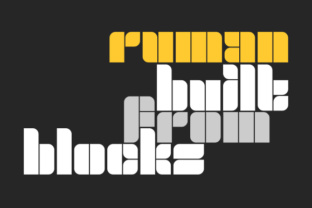
At first glance, Ruman appears to be a geometric display font—clean lines, sharp corners, consistent weight. But look closer, and you’ll notice each character is assembled from individual blocks. This modular DNA gives Ruman a fragmented yet cohesive look. The letters aren’t drawn with continuous curves; instead, they’re built from stacked, aligned, or offset rectangular shapes. This construction method creates a visual rhythm that feels both architectural and digital.
Why does this matter? Because it offers something most fonts cannot: a sense of constructed intentionality. When you see Ruman in a headline, you immediately grasp that the letters were put together piece by piece. This can evoke anything from urban graffiti to pixel art to toy blocks, depending on context. For designers looking to break away from smooth, organic typography, Ruman provides a structured aesthetic that is hard to ignore.
Where Ruman Excels: From Headings to Invitations
Ruman isn’t designed for lengthy body text—its blocky nature would tire the eye in paragraphs. Instead, it thrives in display roles where impact is paramount. Here are several scenarios where Ruman brings maximum value:
- Headings and Titles – Ruman commands attention as a title font. The block structure makes each letter feel weighty, giving headlines a monumental presence. A blog post, magazine article, or section header set in Ruman immediately establishes authority and a modern edge.
- Logos and Branding – Because Ruman is modular and unique, it works exceptionally well for logos that need to stand out on a packed shelf or digital screen. A logo built with Ruman conveys creativity, stability, and a bit of playfulness—perfect for tech startups, creative agencies, or artisanal brands.
- Posters and Flyers – Posters rely on grabbing attention from a distance. Ruman’s chunky letters are legible even when scaled large, and the broken, blocky lines create a dynamic visual texture that draws the eye. Gig posters, event flyers, and promotional materials can all benefit from Ruman’s bold persona.
- Book Covers – A book cover needs to telegraph genre and tone instantly. Ruman’s block-built letters can suggest something experimental, clever, or urban. Non-fiction titles about architecture or design would pair beautifully with Ruman, as would fiction with a tech or dystopian theme.
- Invitations – Unexpected, yes—but Ruman can lend a playful, handcrafted feel to invitations. Imagine a birthday party or launch event invite where the letters look like toy blocks. It’s unexpected and memorable, which is exactly what a good invitation should be.
Don’t limit yourself to these categories. Ruman’s block aesthetic can also enhance social media graphics, video thumbnails, badges, and merchandise like T-shirt prints or mugs.
Practical Benefits of Ruman in Modern Design Workflows
Beyond its visual appeal, Ruman offers practical advantages that fit neatly into contemporary design workflows. In an era where speed and impact are prized, having a font that does the heavy lifting for you is invaluable.
High Legibility at Large Sizes
One common pitfall with highly decorative fonts is that they become illegible when stretched or enlarged. Ruman, thanks to its block construction, maintains consistent readability because each letterform is built from predictable, straight-edged structures. There are no delicate serifs or fragile curves to break up. This makes Ruman an excellent choice for large-format printing, billboards, and digital banners where clarity is non-negotiable.
Versatility Across Moods
You might assume that a block font is one-note, but Ruman surprises. Depending on color, spacing, and surrounding elements, it can appear minimalist, urban, playful, or even elegant. The same font that works for a gritty concert poster can also look refined in a black-and-white logo for a high-end design studio. The secret lies in the negative space between blocks—you can adjust tracking and kerning to evoke different feelings.
Built-in Texture and Pattern
Because each letter is composed of visible blocks, Ruman adds texture to your design without needing overlays or patterns. This is especially useful when you want a layered, dimensional look without heavy use of shadows or gradients. The block construction gives a subtle grid-like rhythm that harmonizes with modern geometric layouts.
Compatibility with Other Typefaces
Ruman pairs well with simpler fonts. For instance, use Ruman for a hero headline and combine it with a clean sans-serif (like Helvetica or Open Sans) for subheadings and body. The contrast between the blocky display and a smooth body font creates a natural hierarchy. Also consider pairing Ruman with a monospace font for a techy, coding-inspired aesthetic.
Considerations Before Using Ruman
As with any specialized typeface, Ruman isn’t a universal solution. Knowing when not to use it is just as important as knowing when to embrace it.
- Small Sizes – Ruman’s block details can get lost or become muddy at small point sizes. Avoid using it for standard body text, footnotes, or tiny labels. Stick to sizes 24pt and above for best results.
- Formal or Traditional Projects – If you’re designing for a law firm, a wedding invitation with a classical script, or a heritage brand, Ruman’s modern, playful blocks may send the wrong message. It suits contemporary and creative contexts best.
- Excessive Customization – While Ruman is modular, altering spacing too drastically can break the block illusion. Keep tracking and letter-spacing adjustments moderate unless you’re going for a very deliberate deconstructed look.
- Licensing and File Formats – Like all fonts, Ruman likely comes with specific licensing terms. If you’re using it in a commercial project (logo, product, or publication), ensure you have the proper license. Check whether OTF, TTF, or web font versions are available for your workflow.
Where Does Ruman Fit in the Broader Type Landscape?
Display fonts have exploded in variety, from hand-drawn scripts to grotesque slabs. Ruman occupies a sweet spot between geometric sans-serifs and modular pixel fonts. It’s less rigid than a traditional grid-based pixel font but more structured than an organic display type. This balance makes Ruman appealing to designers who want order without sterility, and character without chaos.
Moreover, Ruman aligns with current trends in brutalism and digital art. Brutalist design celebrates raw, unpolished aesthetics—bold blocks, exposed grids, and straightforward construction. Ruman fits perfectly into that movement. At the same time, it nods to retro 8-bit visuals (think early video games) without being nostalgic. This duality gives Ruman longevity; it’s not a one-season trend font.
If you’re familiar with typefaces like Poppins or Montserrat, Ruman offers a different kind of boldness. Those are rounded and homogeneous; Ruman is angular and heterogeneous. The blocks create subtle irregularities that make the text feel handmade, even when it’s purely digital. This human touch is rare in geometric typefaces.
Real-World Scenarios: Ruman in Action
Let’s imagine a few concrete applications to help you visualize Ruman’s potential:
- A tech startup pitch deck – The cover slide uses “DISRUPT” in Ruman, with each block filled in a different gradient of electric blue. The subtitle is in light sans-serif. The message is clear: innovative, bold, structured.
- A local record store poster – The store name in Ruman, painted on a brick wall background. The blocks are slightly rotated to mimic falling dominos. It feels edgy, casual, and inviting for music lovers.
- A children’s activity book cover – “BUILD & PLAY” in cheerful, multi-colored Ruman blocks. The letters look like stacking toys. The book’s subtitle uses a rounded sans. Kids and parents are drawn to the playful, tactile type.
- A minimalist architecture firm logo – The firm’s initials in Ruman, spaced widely, in solid black on white. The block construction mirrors the grid-like precision of architectural plans. The logo feels professional yet inventive.
These scenarios showcase Ruman’s adaptability. It’s not confined to one industry—it works wherever blocks and structure are central to the message.
Getting Started with Ruman
If you’re ready to experiment, start by downloading Ruman from a reputable type foundry or marketplace. Many designers find that Ruman works best when it’s the star of the composition—so give it plenty of whitespace. Avoid busy backgrounds that compete with the block details. Use bold, saturated colors or stark black-and-white to let the block construction shine.
Try an exercise: take a simple word, like “ART” or “CODE,” and set it in Ruman. Then try different sizes, letter-spacing, and color fills. Notice how the blocks create internal shapes and negative spaces that change the word’s personality. You might find a new favorite treatment.
Also, consider using Ruman as a layer in combination with other design elements. For example, you can place a semi-transparent block shape behind part of the text to echo the modular theme. The font invites experimentation because its structure is so evident.
Final Thoughts on Ruman’s Block-Built Appeal
Ruman isn’t just a font—it’s a visual concept. Its foundation in blocks makes it ideal for projects that need a touch of geometry, a dash of play, and a strong sense of purpose. Whether you’re working on a poster, a book cover, a logo, or an invitation, Ruman provides a unique voice that stands apart from the sea of generic typefaces.
The key is using it intentionally. Let Ruman be the bold centerpiece you build around, not a background whisper. With its modular nature, high legibility at scale, and natural texture, it can elevate your design and leave a lasting impression. Try Ruman in your next project, and see what blocks of creativity it unlocks.