AZ Audiotape: Reviving the Seventies Sleeve Aesthetic for Modern Design
Typography carries memory. Certain letterforms evoke entire decades, summoning cultural moments through their curves, weight, and surface texture. Among contemporary display fonts, AZ Audiotape stands apart by channeling a distinct material history: the hand-lettered logos found on 1970s record sleeves. The font draws direct inspiration from the branding of a vintage audio tape company, but its visual language extends far beyond nostalgia. It captures the physical wear of analog media, the warmth of aged paper, and the tactile imperfection that digital design often smooths away. For designers, educators, hobbyists, and business owners alike, understanding what AZ Audiotape offers means rethinking how typography can communicate authenticity, history, and personality in a digital-first world.
Where the Letterforms Come From
The seventies were a golden era for album cover art. Record labels and small pressing plants relied on custom logotypes, hand-painted signage, and transfer lettering to create distinctive identities. AZ Audiotape recreates that vernacular. The font’s worn and antique feel comes not from random distress effects but from careful observation of how real ink and paint degrade over time. Corners are slightly rounded. Edges show the subtle crumbling of old screen prints. Strokes carry the uneven density of a letterpress run with low ink. These details are not flaws; they are the font’s defining assets.
Unlike many retro-inspired typefaces that simply mimic a general “old timey” look, AZ Audiotape ties its DNA to a specific object: the logo of a 1970s recording tape manufacturer. That origin story matters for creators who want their projects to feel grounded in a real historical moment rather than a vague vintage pastiche. The font works because it references something tangible—an actual sleeve, an actual brand, an actual decade of analog production.
Visual Characteristics That Define a Genre
Every display typeface has its own grammar, and AZ Audiotape speaks with a specific visual vocabulary. Understanding these characteristics helps designers choose the right contexts and avoid misuse.
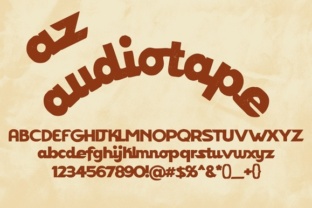
- Inconsistent stroke weight: Letters shift subtly between thick and thin, mimicking hand-painted signage where a brush loaded with enamel paint left variable marks. This irregularity gives the font a human, imperfect rhythm.
- Distressed edges: Instead of sharp vector-perfect outlines, AZ Audiotape carries chipped, eroded contours. These are not random noise but structured wear that follows the logic of physical materials—ink flaking off a cardboard sleeve, or paint cracking on a wooden sign.
- Condensed proportions: Many characters are vertically elongated, a hallmark of seventies display typography used to fit large titles onto narrow album spines and small labels.
- Low contrast: Unlike elegant serif fonts with dramatic thick-thin transitions, AZ Audiotape keeps contrast low, reinforcing its industrial, utilitarian roots. The letters feel stamped or printed rather than written.
- Unexpected ligatures and alternates: The font includes glyph variations that recreate the idiosyncratic letterforms found on original tape reels—an alternate R with a longer leg, a K with a broken diagonal, a lowercase g that tilts slightly forward.
These features collectively produce a texture that feels excavated from a crate of dusty 45s. The font does not pretend to be perfect, and that is precisely its power.
Real-World Applications Across Creative Fields
The practical uses for AZ Audiotape extend far beyond music-related design. Its worn, analog quality serves projects where credibility, history, and a handmade ethos matter.
Music and Merchandise Packaging
This is the font’s natural habitat. Album covers, cassette tape releases, vinyl reissues, and band merchandise all benefit from the direct visual link to seventies recording culture. Independent musicians and labels use AZ Audiotape to signal that their work belongs to a lineage of tape-trading, lo-fi production, and DIY distribution. Even digital streaming platforms incorporate the font into playlist covers and promotional assets when targeting listeners who value vintage aesthetics.
Branding for Small Businesses
Coffee roasters, craft breweries, record stores, barbershops, and vintage clothing retailers have gravitated toward AZ Audiotape for logos, signage, and packaging. The font conveys authenticity and handmade quality without needing to explain it. A coffee bag printed with AZ Audiotape looks like it comes from a roastery that has been operating since the seventies, even if the business opened last year. That shortcut to credibility is valuable for entrepreneurs trying to differentiate in crowded markets.
Editorial and Poster Design
Magazine spreads about analog culture, film criticism, photography retrospectives, and music journalism use AZ Audiotape to anchor headlines and pull quotes. The font’s worn texture provides a visual counterpoint to clean body text, creating contrast that guides the reader’s eye. Poster designers appreciate how the distressed edges print well at large sizes without looking harsh or overly digital.
Motion and Digital Media
Video title sequences, social media graphics, and website hero sections also work with AZ Audiotape when the content demands a retro mood. The font renders effectively on screens when paired with subtle grain overlays or VHS-style scan lines. Motion designers find that its uneven stroke weights add organic movement even in static frames, because the letterforms seem to vibrate with the energy of old analog equipment.
Advantages Over Other Retro Display Fonts
The market for vintage-inspired typefaces is crowded. Fonts like Bebas Neue, Oswald, or Playfair Display offer period flavor, but they lack the specific tactile quality that AZ Audiotape brings. Several advantages set this font apart.
- Material honesty: Many distressed fonts apply a uniform grunge filter over pristine vector shapes. AZ Audiotape builds wear into the letterforms themselves. The damage is structural, not superficial, resulting in shapes that look genuinely aged rather than artificially processed.
- Historical specificity: Designers who want to evoke exactly 1973–1979, rather than a generic mid-century or retro vibe, find AZ Audiotape unmatched. Its reference points are narrow and precise, which paradoxically makes it more versatile for targeted projects.
- Readability at display sizes: Despite its distressed surface, the font remains legible in headlines and medium-size text. The character spacing and proportions follow established typographic conventions, so the vintage texture does not sacrifice communication.
- Cohesive character set: Some retro fonts only have uppercase letters or limited punctuation, forcing designers to mix and match awkwardly. AZ Audiotape includes a full set of uppercase, lowercase, numerals, and common symbols, enabling its use across a wide range of layouts.
Considerations When Working with the Font
No typeface is a magic bullet. AZ Audiotape performs best when designers understand its limitations and plan around them.
Use it at larger sizes. The distressed edges and variable stroke weights that look beautiful at 72 points can become muddy and illegible at 12 points. This font is designed for display, not body copy. Pair it with a clean, neutral sans-serif or a simple serif for long-form reading text.
Watch the contrast with backgrounds. Because the letterforms already carry visual noise, busy backgrounds can overwhelm them. Solid colors, subtle textures, or images with large areas of negative space work best. Printing on dark backgrounds may require a heavier weight or a stroke outline to maintain clarity.
Be mindful of brand tone. AZ Audiotape communicates nostalgia, warmth, and analog authenticity. It does not convey minimalism, futurism, or corporate efficiency. Brands that want to appear cutting-edge or sterile should look elsewhere. Knowing when not to use the font is as important as knowing when it fits.
Test ligatures and alternates. The font includes optional alternate characters that may change standard letterforms. Designers should check how these glyphs render in their software and whether they maintain consistency across a word or phrase. A random alternate can break the visual flow if not applied intentionally.
How Different Users Can Approach the Font
The broad audience for AZ Audiotape means that professionals, hobbyists, educators, and business owners each interact with it differently. Understanding these perspectives helps everyone get more value from the typeface.
For Professional Designers
Treat AZ Audiotape as part of a curated toolbox alongside paper textures, halftone patterns, and film grain overlays. Layer it with other analog elements to build rich compositions. Use it sparingly: one headline set in AZ Audiotape carries more weight than a whole page of it. The font works best as an accent—a bold statement that signals the project’s era and atmosphere.
For Small Business Owners
If your brand identity leans on authenticity and craft, this font can become a cornerstone of your visual language. Use it on your storefront sign, your product labels, your website hero image, and your business cards. Consistency across touchpoints reinforces the handmade message. However, avoid using it for tiny print like ingredients lists or fine-print disclaimers where legibility suffers.
For Educators and Researchers
Typography teachers can use AZ Audiotape as a case study in how historical reference elevates design. Compare it with a generic distressed font to demonstrate the difference between superficial grunge and informed letterform design. Discuss how the font’s origins in seventies record sleeves connect to broader cultural movements in music, printing, and consumer branding.
For Hobbyists and Enthusiasts
If you create fan art, mix tapes, zines, or personal projects, AZ Audiotape gives your work an instant sense of era and intention. Pair it with cassette tape icons, Polaroid borders, and warm color palettes to build cohesive retro compositions. Experiment with printing the font on different paper stocks—newsprint, craft paper, or glossy photo paper—to see how the distressed edges interact with real-world surfaces.
Pairing AZ Audiotape with Other Design Elements
The font does not exist in isolation. Its effectiveness depends on the visual ecosystem around it. Several natural pairings enhance its vintage character.
- Color palettes: Warm ochre, burnt orange, mustard yellow, olive green, and brown dominate seventies design. Muted tones work better than bright digital colors. Faded pastels also complement the font’s worn texture.
- Imagery: Photographs with film grain, light leaks, and natural shadows match the font’s analog origins. Avoid overly sharp HDR images that clash with the soft, distressed lettering.
- Additional textures: Subtle paper grain, scan lines, and slight blur effects help unify the composition. Too many textures, however, create visual chaos. Use them selectively, letting the font remain the focal point.
- Secondary typefaces: Clean geometric sans-serifs like Helvetica, Univers, or Gotham provide contrast without fighting AZ Audiotape’s personality. A simple serif like Century Schoolbook or Times New Roman also works for body text, evoking the typesetting found in vintage liner notes.
Why the Worn, Antique Feel Endures
Trends in typography cycle between precision and imperfection. The current design landscape leans heavily into authenticity, sustainability, and human connection. In an era of AI-generated imagery and sterile corporate branding, a font like AZ Audiotape offers something rare: visible evidence of human hands and analog processes. The wear on each letterform tells a story of use, age, and survival. That narrative resonates with audiences tired of polished perfection and hungry for realness.
Moreover, the font taps into a broader cultural interest in the physical artifacts of the pre-digital age. Vinyl records, cassette tapes, film cameras, and hand-printed ephemera have all experienced revivals because they offer a sensory richness that digital counterparts lack. AZ Audiotape translates that sensory quality into typography, allowing designers to bring a fragment of that analog world into any project.
Whether you are building a brand from scratch, designing an album cover, creating educational materials about graphic design history, or simply experimenting with a new typeface for a personal project, the font rewards careful use. It asks designers to slow down, to think about texture and context, and to honor the material culture that inspired it. In return, it delivers a visual voice that feels lived-in, warm, and unmistakably real.