AZ Dude: Evaluating the Playful Outline Font for Your Design Projects
When browsing for a typeface that brings energy and informality to a project, you may come across AZ Dude. It is a display font characterized by its outlined letterforms and a distinctly playful visual rhythm. Unlike solid, conventional typefaces designed for long body text, AZ Dude is built to grab attention and convey a lighthearted, experimental mood. This article helps you evaluate whether this font aligns with your specific design goals, audience expectations, and project constraints.
What Is AZ Dude?
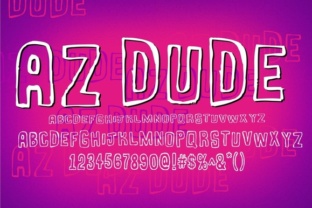
AZ Dude is a decorative outline font, meaning each character is defined by its contour rather than a filled interior. The letterforms often feature rounded terminals, uneven stroke widths, and a hand-drawn quality that reinforces a casual, approachable personality. It belongs to the category of display fonts—typefaces intended for headlines, logos, posters, and other short-form applications where visual impact matters more than extended reading comfort.
The font’s design draws inspiration from graffiti, cartoon lettering, and mid-century playful typography. Its outlined nature creates an open, airy appearance that works well when layered over backgrounds or combined with other visual elements. Designers often choose AZ Dude when they need a typeface that feels spontaneous rather than formal, and when they want the text itself to serve as a graphical element.
Why Consider AZ Dude? Potential Reasons for Interest
If you are evaluating AZ Dude, you likely have one or more of the following motivations:
- Seeking a distinctive visual tone: You want your project to stand out with a look that is uncommon in traditional corporate or editorial design.
- Working on youth-oriented or casual content: The font’s playful nature suits children’s products, entertainment branding, event flyers, or social media graphics aimed at a younger demographic.
- Experimenting with outline typography: You are drawn to the transparency and lightness that outline fonts offer, especially for overlaying on images or colorful backgrounds.
- Needing a typeface with character: You find many standard fonts too neutral and want something that injects personality without requiring heavy customization.
Understanding your primary motivation helps clarify whether AZ Dude is the right tool or whether another font might serve you better.
Benefits of Using AZ Dude
When applied thoughtfully, AZ Dude offers several practical advantages:
Strong Visual Impact
Because it is an outline font, AZ Dude creates a striking contrast against solid backgrounds. The negative space within each letter draws the eye and can make short words or phrases appear larger and more prominent than they would in a solid typeface of the same size. This makes it effective for hero headlines or key messaging where you want immediate attention.
Playful and Approachable Personality
The irregular, hand-drawn quality of AZ Dude conveys warmth and approachability. It avoids the sterile feel of many geometric sans-serifs and instead suggests creativity, humor, and informality. This can help build connection with audiences who respond to authenticity and fun.
Versatility in Layering and Composition
The outlined structure allows the background to show through the letters, making AZ Dude excellent for layering over photographs, patterns, gradients, or textured surfaces. Designers often use it in combination with solid typefaces to create depth and hierarchy without adding visual clutter.
Ease of Experimentation
Because the font has a simple, open structure, it invites customization. You can easily add fills, strokes, shadows, or color gradients inside the outlines without compromising legibility. This flexibility supports iterative experimentation during the design process.
Tradeoffs and Practical Considerations
No typeface is perfect for every situation, and AZ Dude has several limitations worth weighing:
Limited Legibility at Small Sizes
Outline fonts generally perform poorly at small point sizes. The thin strokes can become faint, and the open interiors may make letters difficult to distinguish. For body text, captions, or small print, AZ Dude is rarely suitable. If your project requires reading comfort below roughly 24 points, you will likely need a more conventional companion font.
Narrow Audience Fit
The playful look that makes AZ Dude appealing for some projects may feel inappropriate for others. If your audience expects a serious, professional, or authoritative tone—such as in legal documents, medical communications, or financial reports—this font could undermine credibility. Context is critical.
Readability in Long Phrases
While short headlines work well, longer strings of text in AZ Dude can become tiring to read. The irregular letterforms and open spacing reduce the natural word shape that aids fast reading. For slogans, taglines, or brief labels it is fine, but for paragraphs or multi-line headings it may cause friction.
Potential for Overuse
Because the font is distinctive, using it too broadly within a single design can feel chaotic or gimmicky. Restraint is needed. Most effective applications limit AZ Dude to one or two key text elements and pair it with a simpler, neutral typeface for the rest of the content.
Where AZ Dude Is a Strong Fit
Based on its characteristics, AZ Dude tends to perform well in the following scenarios:
- Posters and flyers for events: Concerts, festivals, parties, or community gatherings benefit from the energetic, informal vibe.
- Children’s books, educational materials, and toy packaging: The font aligns with the playful, colorful expectations of young audiences.
- Social media graphics and digital banners: Short, punchy text overlaid on images gains visual interest without overwhelming the composition.
- Branding for creative businesses: Agencies, studios, or product lines focused on art, design, or entertainment can use AZ Dude to signal creativity.
- Seasonal or promotional campaigns: Holiday cards, sale announcements, or limited-edition packaging often benefit from a temporary, fun aesthetic.
In these contexts, the font’s tradeoffs are less critical because the message is short, the audience is receptive to playful design, and the overall tone supports experimentation.
When Alternatives May Be Worth Considering
There are situations where even a well-liked font like AZ Dude may not be the best choice. Consider alternatives if any of the following apply:
You Need a Full Typeface Family
AZ Dude typically comes in a single style. If your project requires multiple weights (light, regular, bold) or italics for hierarchy and emphasis, you may need a more complete font family. Many outline fonts exist within larger families that include solid counterparts, which offers more flexibility.
Legibility Is Paramount
If your content includes numbers, special characters, or small text that must be read quickly and accurately, a solid display font or a well-crafted sans-serif may be more reliable. For wayfinding, data visualization, or instructional labels, clarity should drive the choice.
You Want a More Refined or Vintage Look
AZ Dude has a contemporary casual feel. If you are aiming for a vintage, retro, or elegant outline style, other fonts such as Lobster, Pacifico, or Bubblegum Sans might offer a different mood while still providing the outline aesthetic. Similarly, if you need a more polished and geometric outline, fonts like Lemon or Museo could be alternatives.
Your Project Requires Professional or Corporate Tone
For business presentations, corporate reports, or government communications, the playful nature of AZ Dude can clash with expectations. In such cases, a neutral sans-serif or a refined serif will better serve readability and credibility.
Practical Decision-Making Insights
To determine whether AZ Dude is right for your project, consider these practical steps:
- Test at intended size and medium: Download a trial version if available and set your key headline in AZ Dude at the actual dimensions you plan to use. View it on screen, printed, or in mockup form. Assess legibility from a typical viewing distance.
- Evaluate the emotional fit: Show your design to a few people who represent your target audience. Ask them to describe the tone they feel. If words like “fun,” “casual,” “creative,” or “youthful” emerge, the font is likely aligned. If they say “messy,” “hard to read,” or “unprofessional,” reconsider.
- Plan for hierarchy: Decide where AZ Dude will carry the most visual weight. Use it for the primary headline only. Pair it with a clean, simple sans-serif (like Open Sans or Roboto) for secondary text, captions, and body copy. This creates contrast and maintains readability.
- Consider color and background: Because AZ Dude is an outline font, it works best on solid or highly contrasted backgrounds. Avoid placing it over busy patterns or low-contrast images. Ensure the stroke width remains visible after any background treatment.
- Check licensing and availability: Confirm that you have the appropriate license for your intended use—commercial projects, web embedding, or print runs. Some free fonts have restrictions that may affect your project.
Final Perspectives on AZ Dude
AZ Dude is not a universal solution, and it was never intended to be. It is a specialized display font that excels in specific contexts where personality, informality, and visual impact are priorities. For designers working on projects that embrace experimentation and playfulness, it offers a distinctive tool that can elevate the design when used deliberately.
The key to success with AZ Dude lies in understanding its limitations and respecting its strengths. Use it sparingly, pair it thoughtfully, and always test in context. If your project requires serious reading or broad appeal, a more conventional typeface will likely serve you better. But if you have a short message, a receptive audience, and a desire to inject genuine character into your design, AZ Dude is certainly worth trying—and it may become a favorite in your creative toolkit.