Carbon Script: Where Hand-Drawn Texture Meets Digital Typography
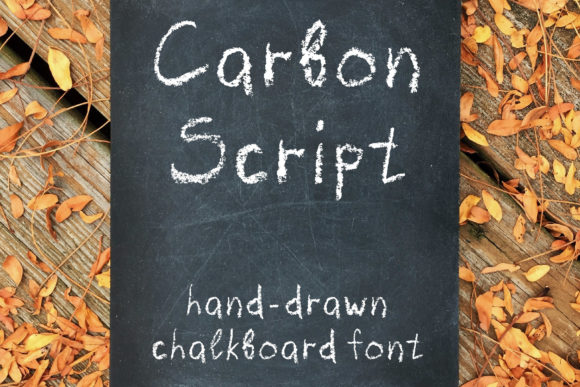
There is something undeniably compelling about imperfection in design. In a world saturated with perfectly vectorized logos, clinical sans-serif headlines, and hyper-polished branding, the human touch has become a rare commodity. When you open a font library and scroll past the predictable options, you are often searching for that one typeface that feels like it was made by hand, not by algorithm. That is precisely where Carbon Script enters the conversation. With its hand-drawn charcoal roots and seamlessly integrated texture, this typeface behaves like a living medium on screen. On a white background, it reads as bold, smudgy charcoal strokes. Flip the color scheme, and it transforms into something that closely resembles chalk on a dark board. This dual personality is not merely a visual gimmick — it is a fundamental reimagining of what a digital font can communicate. For designers, small business owners, educators, and content creators alike, understanding the nuances of Carbon Script opens up a new vocabulary of tactile, authentic expression.
What Makes Carbon Script Distinct in a Crowded Typeface Market
The font industry has no shortage of script options. From elegant calligraphy to rough brush lettering, the spectrum is wide. Yet Carbon Script occupies a specific niche that few others dare to inhabit: the intersection of deliberate roughness and genuine readability. Unlike digitally polished scripts that smooth every edge to perfection, this font retains the organic pressure points, varying stroke thickness, and subtle grain that come from real charcoal on paper. The characters do not feel manufactured; they feel drawn. When you set a headline in Carbon Script on a white canvas, you can almost sense the grit of the paper surface beneath the letters. That tactile quality is rare in typography and even rarer in fonts that remain legible at display sizes. The font achieves this by preserving the natural inconsistencies of hand lettering — slightly wobbly ascenders, uneven baselines, and soft fades at the ends of strokes — without sacrificing the structural integrity that makes text readable.
The Chalk and Charcoal Duality That Defines Its Aesthetic
What sets Carbon Script apart from other rough scripts is its ability to function convincingly in two entirely different visual contexts. On a light background, the dark strokes carry the weight and texture of compressed charcoal. The letters appear to have been drawn with the side of a stick, leaving behind the characteristic dusty edges and variable opacity that artists chase in traditional sketching. In this mode, the font feels raw, artistic, and slightly unfinished in the most intentional way. When the background shifts to dark tones — think deep navy, charcoal gray, or pure black — the same typeface reads as chalk. The white or light-colored characters take on a powdery, slightly translucent quality that mimics real chalk on a slate board. The texture becomes softer, the edges more diffused, and the overall impression shifts from studio sketch to classroom or café menu board. This duality is not achieved through alternate glyph sets or stylistic sets; it is baked into the design itself. The same letterforms behave differently depending on their environment, which makes Carbon Script unusually versatile for a single-weight script font.
Real-World Applications Across Creative and Commercial Projects
The practical usefulness of Carbon Script extends far beyond decorative headlines. For a coffee shop owner looking to create an authentic chalkboard menu without hiring a hand-lettering artist every week, this font provides a consistent yet organic look that evolves naturally with the brand. The chalk version on dark backgrounds works particularly well for daily specials, drink names, and short descriptions. Because the texture reads as genuine chalk, customers often mistake digital signage for hand-painted boards. That authenticity builds trust and reinforces the handmade, artisanal quality that many food and beverage brands strive to project. Similarly, boutique retail stores have used Carbon Script for window signage, price tags, and in-store displays. The charcoal variant on white backgrounds evokes the feeling of a sketchbook or artist’s notebook, which aligns well with brands that emphasize craftsmanship, bespoke products, or creative services. Wedding stationery designers have also adopted the font for save-the-date cards and invitation suites where a hand-drawn, intimate feel is desired. In each of these scenarios, the font does not merely display text — it communicates a process, a material, and an artistic intent.
For Educators and Content Creators: More Than Just Decoration
Teachers and online educators have found Carbon Script particularly useful for presentation materials that need to feel approachable rather than institutional. Lecture slides, classroom posters, and instructional handouts set in the chalk variation create a familiar, welcoming atmosphere reminiscent of actual classroom chalkboards. When students see text that looks hand-drawn, the psychological barrier between formal instruction and personal learning often lowers. For content creators producing YouTube thumbnails, social media graphics, or digital course materials, the font offers a way to inject personality without commissioning custom lettering. A cooking channel using Carbon Script for recipe titles on dark backgrounds immediately signals a rustic, homemade approach. A craft tutorial channel using the charcoal version on white evokes the feel of a sketchbook or notebook. The font adapts to the tone of the content rather than imposing its own, which is a hallmark of thoughtful typeface design. It does not scream for attention; it simply adds texture and humanity to the message.
Strengths That Make Carbon Script a Practical Choice
Beyond its obvious visual appeal, Carbon Script offers several practical advantages that professionals should consider. First, its readability at medium to large sizes is notably good for a textured script. While many rough scripts become illegible below 24 points, this font maintains clarity down to around 18 points for short phrases, especially in the chalk variant where contrast is higher. Second, the texture is built into the font file itself, meaning no additional layering, blending modes, or Photoshop filters are required to achieve the charcoal or chalk effect. This saves significant time in production workflows, particularly for designers who need to output multiple assets quickly. Third, the font works across a wide range of substrates and media. It holds up in print on matte paper, textured cardstock, and even fabric. On screen, the texture compresses well for web use without becoming muddy or losing its characteristic grain. Finally, the emotional response it generates is consistent. People intuitively recognize the material quality of charcoal and chalk, and that recognition creates an immediate connection that polished fonts often fail to establish.
What to Keep in Mind When Choosing Carbon Script
No typeface is universally perfect, and Carbon Script has considerations that potential users should weigh carefully. The most important limitation is its performance at very small sizes. Below 14 points, the texture and stroke variation begin to compromise legibility, especially in the charcoal variant on white backgrounds. For long body text, footnotes, or anything requiring sustained reading, this font is not appropriate. It is a display face, not a text face. Another consideration is the stylistic impact on brand perception. Because the font carries such strong material associations, it can unintentionally steer a brand toward a rustic, handmade, or artisanal identity even when that is not the goal. A corporate law firm or financial services company would likely find the aesthetic mismatched with their professional image. Additionally, users working in multilingual contexts should verify that the glyph set covers the specific diacritics or characters needed for their language. The font’s charm lies in its texture, but that same texture can make extended text passages feel visually exhausting. For headlines, short blocks, and emphasis, it excels. For paragraphs, look elsewhere.
Practical Guidance for Evaluating Suitability
When deciding whether Carbon Script is right for your project, consider three factors: context, scale, and intent. Context refers to the medium and environment where the text will appear. A dark-background digital display for a restaurant menu is an ideal use case. A white-background printed brochure for a tech startup might be less fitting. Scale is about size and distance. The font performs best when viewed from arm’s length or farther, at sizes where the texture can be appreciated without straining the eyes. Intent is the most subjective factor. Ask yourself what feeling the text should evoke. If the answer includes words like authentic, handmade, warm, rustic, creative, or approachable, then Carbon Script warrants serious consideration. If the desired tone is sleek, modern, authoritative, or minimalist, a cleaner script or sans-serif would likely serve the project better. Testing the font in context is essential. Place it on the actual background color you plan to use, at the actual size, and view it on the actual device or print medium. The texture interacts differently with different surfaces, so a preview on a glossy screen may not fully represent how the chalk or charcoal effect will appear on matte paper or fabric. To illustrate the font’s potential, consider the case of a neighborhood bakery that wanted to move away from generic stock imagery and create a cohesive visual identity across packaging, signage, and social media. The owner chose Carbon Script as the primary display typeface. On the bakery’s chalkboard daily specials, the chalk variant on a dark green background made the text feel freshly written each morning. On paper pastry boxes, the charcoal variant printed on kraft paper created a sketchbook aesthetic that customers described as “thoughtful” and “personal.” On Instagram posts, the font appeared in both modes depending on the photo’s background, creating visual consistency without monotony. The bakery reported increased customer engagement specifically around the signage, with patrons photographing the boards and sharing them online. The font became a subtle brand signature, not because it was flashy, but because it felt materially honest. That is the kind of outcome that makes a typeface more than a utility — it becomes a contributor to the brand story. As digital tools make it easier to produce flawless, sanitized visuals, the appetite for imperfection grows proportionally. People crave authenticity, and texture is one of the most direct ways to signal it. Carbon Script delivers texture without requiring the user to master charcoal drawing or chalk lettering techniques. It democratizes access to a hand-drawn aesthetic that would otherwise require specialized skills and time. For small business owners who cannot afford a dedicated lettering artist, for educators who want their materials to feel less sterile, and for designers who need a quick way to add organic warmth to a layout, this font fills a genuine gap. It does not pretend to be something it is not — it embraces its material roots and invites the audience to feel, not just read. In an era where so much communication feels automated and distant, a typeface that looks like it was made by a human hand is not a luxury. It is a reminder of the craft that still lives at the heart of visual communication.Real-World Scenario: A Bakery Rebranding with Chalk and Charcoal
The Value of Texture in a Digital Age
🔗 You Might Also Like